
Student Car Shipping: Moving to (or from) Temple, Drexel, or UPenn
Yorka Auto Transport Team
Author
April 1, 2026
Published
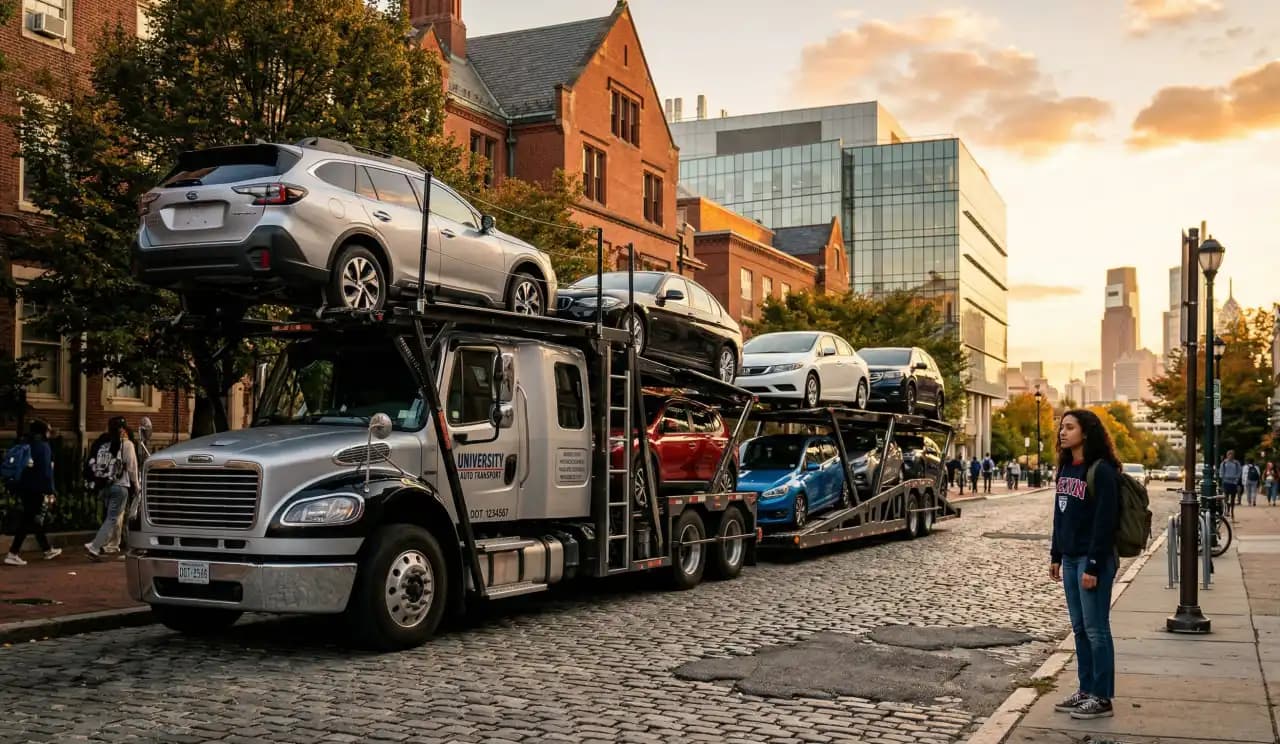

I. Strategic Logistics: Navigating the Car Shipping Process
The endeavor of transporting a vehicle across state lines necessitates a departure from the colloquial "road trip" in favor of professional logistics. For the burgeoning scholar, the primary objective is to mitigate the attrition—both mechanical and psychological—associated with long-distance transit.
Optimal Timing and Academic Calendars
The temporal dimension of car shipping is governed by the cyclical nature of the university year. To ensure your vehicle's arrival coincides with your residence hall check-in or lease commencement, a lead time of three to four weeks is advisable. Shipping during the autumnal peak (late August) often yields higher demand; conversely, scheduling delivery a week prior to the "move-in" madness can provide a strategic advantage, allowing you to familiarize yourself with the Philadelphia street grid before the influx of thousands of students.
The Dichotomy of Transport Modes
Students must adjudicate between Open-Air Transport and Enclosed Auto Transport. The former is the ubiquitous standard, utilizing multi-car haulers that are highly cost-effective but leave the chassis exposed to atmospheric pollutants and road debris. Enclosed transport, while carrying a premium tariff, offers a sanctuary for high-value or sentimental vehicles, shielding them from the erratic precipitation of the Mid-Atlantic.
Fiscal Prudence
Economic considerations are paramount for those operating under a student budget. Many reputable logistics firms offer a Student Concession, typically ranging from 5% to 15% off the standard freightage. To secure the most equitable quote, one should utilize a "Price Lock" guarantee to avoid the bait-and-switch tactics occasionally employed by less scrupulous brokers during high-volume periods.
II. Institutional Parking Paradigms
Each of Philadelphia’s premier institutions presents a unique topographical challenge regarding vehicular storage.
Temple University
Temple University’s urban footprint is concentrated largely in North Philadelphia. For students residing near the Main Campus, the Liacouras and Montgomery garages serve as the primary bastions for overnight storage. The university utilizes a permit-based hierarchy; however, many students overlook the "Flex Parking" options, which allow for a pay-per-entry model via the Mobile OWLcard, providing a financial reprieve for those who do not require daily vehicular access.
Drexel University
Drexel’s campus, nestled within the vibrant University City, is notoriously compact. The Drexel Parking Garage at 34th and Ludlow is the central hub for long-term permits. It is imperative to note that Drexel’s enforcement is rigorous; vehicles lacking the requisite electronic credentials are frequently subject to immobilization or civil citations. Students should prioritize renewing their "Term Permits" well in advance of the quarterly shifts to avoid the bureaucratic labyrinth of waitlists.
The University of Pennsylvania
UPenn maintains a sophisticated transit ecosystem that often de-prioritizes private car ownership. Nevertheless, for those who require a vehicle, the Penn Parking Services manages a network of garages that integrate with the LUCY (Loop around University City) shuttle system. Due to the high density of the Ivy League campus, parking here is often the most expensive in the city. Students are encouraged to explore the "Occasional Parking" permits if they only intend to use their vehicle for periodic departures from the urban core.
III. Philadelphia Integration and Vehicular Maintenance
Once the vehicle has been successfully offloaded from the carrier, the student transitions from a "shipper" to a "Philadelphia motorist," a role that requires a specific set of localized competencies.
Regulatory Compliance
If the student is maintaining a permanent residence in another state, they may often keep their home registration; however, local insurance policies must be scrutinized. Pennsylvania's "No-Fault" insurance statutes may differ significantly from your home jurisdiction. Furthermore, obtaining a City of Philadelphia Residential Parking Permit (RPP) is essential if you intend to park on-street in neighborhoods like Powelton Village or Cecil B. Moore, as it prevents the relentless accumulation of municipal fines.
Urban Preservation
The Northeast corridor is synonymous with road salt and corrosive environmental stressors. To prevent the oxidization of the vehicle’s undercarriage, a comprehensive detailing and wax application are recommended post-shipping. Additionally, the prevalence of "tight" parallel parking in Philadelphia necessitates a stoic acceptance of minor cosmetic imperfections, though the installation of a bumper protector can serve as a functional deterrent against the tactile nature of urban maneuvering.
In synthesis, student car shipping is not merely a task of relocation, but a strategic exercise in logistics and urban adaptation. By aligning with professional carriers and understanding the idiosyncratic parking mandates of Temple, Drexel, and UPenn, students can ensure their transition to the City of Brotherly Love is as seamless as their academic pursuits.
Call us today to get your free quote
(833) 333-2353
Related Articles
Continue reading with these related posts
Shipping a Car from California to Texas: 2026 Price Guide
Planning a move from California to Texas? Check our 2026 guide for shipping costs from LA to Dallas, SF to Austin, and more. Compare open vs. enclosed rates and avoid common shipping scams.
Shipping a Car from Florida to New York: 2026 Price Guide
Planning to ship a car from Florida to New York? Check our 2026 pricing guide for average rates, seasonal "snowbird" trends, and expert tips to save $200+ on your East Coast transport.
How Much Does Vehicle Shipping Cost? 2026 Pricing Breakdown
Discover the real costs of vehicle shipping in 2026. Get expert insights on pricing factors, average rates per mile, and how to save $200+ on your next shipment.